Review: Just a Girl Who Loves Horse and T-Shirt Design
When I first pulled up the Just a Girl Who Loves Horse and T-Shirt file on my workstation, my immediate reaction was one of relief. As someone who spends hours digitizing and testing machine embroidery design files for clients, I know exactly how frustrating it is to open a package only to find messy nodes, poor pathing, or artwork that simply doesn't translate well to thread. This asset, categorized under Print Templates and Graphics, initially presents as a digital illustration, but for us in the stitching world, the real question is always: "Will this survive the hoop?" After reviewing the provided SVG, EPS, and high-resolution PNG files, I can confidently say this design holds significant potential for custom apparel and boutique merchandise, provided you approach the digitization or application process with a strategist's eye.
First Impressions and Visual Personality
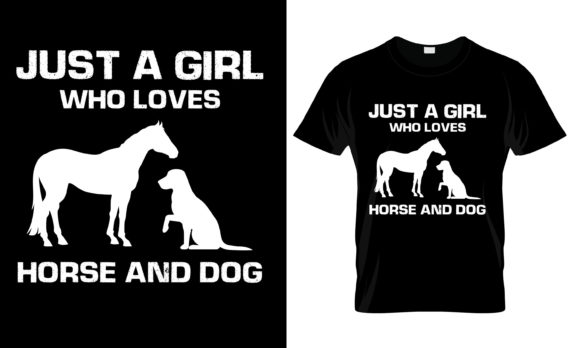
The mood of this design is undeniably playful and nostalgic. It taps into that specific niche of equestrian enthusiasm that transcends age groups, appealing to everyone from young riders to adult hobbyists. The layout typically features a balance between typography and imagery, which is crucial for readability once stitched. In its raw graphic form, the lines are clean, suggesting that if you are using this as a base for creating your own embroidery file, the vector paths in the SVG and EPS formats should be relatively easy to work with. There are no overly complex gradients or microscopic details that would vanish under a satin stitch or get lost in a fill stitch. This simplicity is a strength; it means the design has a strong silhouette, which is the most important factor for recognition at a distance, whether on a tote bag design hanging in a craft fair booth or a sweatshirt embroidery piece worn at a local horse show.
Real-World Application: The Boutique Sweatshirt Scenario
To truly evaluate this asset, I imagined a real-life scenario common for many Etsy sellers and small shop product creators. Picture a customer ordering a personalized gift for their daughter who just started riding lessons. They want something cozy but stylish, not a stiff, heavy uniform. You decide to use the Just a Girl Who Loves Horse and T-Shirt concept on a premium French terry sweatshirt. Because the source files include a 4500×5400 PNG at 300 dpi, you have ample resolution to create a crisp printable mockup for the customer approval stage before you even thread the machine. This level of detail in the design assets builds immediate trust; the client sees a professional presentation, not a pixelated internet clipart.
However, moving from screen to fabric requires careful consideration. If you are digitizing this yourself based on the graphics, you need to think about stitch density. A design that looks perfect on paper can become a puckered mess on a stretchy knit if the density is too high. For a sweatshirt, I would recommend utilizing a combination of running stitch for fine outlines and lighter fill patterns for the larger areas to maintain the drape of the fabric. If you are using the files for heat transfer vinyl (HTV) as an alternative to stitching, the cut lines from the SVG will be critical. The versatility here allows you to offer both embroidered and printed options, expanding your craft business revenue streams without needing entirely new designs.
Navigating Fabric Textures and Hoop Constraints
One of the biggest challenges with any graphic-heavy design is adapting it to difficult surfaces. While this design shines on flat, stable fabrics like cotton twill or canvas—perfect for a sturdy embroidered patch or a kitchen towel—it requires more caution on textured or curved surfaces. If you plan to place this on a cap, the curvature of the front panel can distort the text elements. In such cases, you might need to adjust the pull compensation or slightly enlarge the lettering to prevent the stitches from pulling together and becoming illegible. Similarly, when working with dark fabrics, the contrast becomes your best friend. Ensure your thread colors pop against the background; a light-colored thread on a navy or black garment can look stunning, but only if the underlay is sufficient to prevent the fabric from showing through the stitches.
For those attempting this on a baby embroidery project, such as a onesie or a small bib, the size of the design relative to the hoop size is paramount. You may need to scale the design down significantly. When shrinking graphics, tiny details often disappear. It is vital to inspect the smaller elements of the horse illustration and the font. If the original graphic has very thin lines, they might need to be thickened in your digitizing software to ensure they don't break during washing. Always test the design on scrap fabric of the same weight and texture as your final finished product. This step cannot be skipped; it saves you from ruining expensive garments and protects your reputation as a maker.
Commercial Viability and Brand Consistency
From a business perspective, the Just a Girl Who Loves Horse and T-Shirt design offers excellent value for commercial embroidery projects. The theme is evergreen; equestrian lovers are a dedicated demographic that consistently seeks out personalized gear. Whether it's for holiday embroidery gifts, team uniforms for a local riding club, or everyday wear, the design fits seamlessly into various collections. Using high-quality source files like the provided EPS and SVG ensures that your branding remains consistent across different mediums. If you decide to sell digital versions of your stitched creations as digital embroidery file products themselves, you must strictly adhere to the licensing terms of the original graphic. Since the product description mentions it is great for men, women, kids, and teens, the market reach is broad, but the license dictates whether you can sell the digitized stitch file or only the physical stitched item.
Furthermore, the visual appeal of this design contributes directly to perceived value. A clean, well-executed embroidery job signals professionalism. Customers are willing to pay a premium for items that look like they were made with care and precision. The clarity of the stitch work, the choice of high-sheen threads, and the neatness of the backing removal all contribute to the "giftability" of the item. In a crowded marketplace, these finishing touches are what turn a one-time buyer into a loyal customer.
Final Verdict and Designer Notes
In conclusion, the Just a Girl Who Loves Horse and T-Shirt graphic is a robust starting point for a variety of creative endeavors. Its strength lies in its clear composition and versatile theme. However, its success as an applique design or a direct stitch project depends entirely on the skill of the operator and the preparation involved. Before committing to a production run, I strongly advise checking the specific license details regarding commercial use, especially if you intend to resell the digital files or mass-produce physical goods. Test your color contrasts rigorously, paying attention to how the design reads in black and white as well as color. Verify that your chosen stabilizer matches the fabric weight to avoid distortion. With the right technical approach, this design can elevate your portfolio, delight your customers, and serve as a reliable staple in your library of Print Templates and embroidery projects.